
- info@whitestoneinternationalcollege.org.uk
- +44 20 3727 6493
- Mon - Fri : 08.00-17.00
Whitestone International College of Innovation delivers quality-assured, standards-aligned programmes that integrate academic rigour, industry relevance, and digital fluency to develop principled leaders who deliver measurable impact.
- London, United kingdom
- +44 20 3727 6493
-
Info@whitestoneinternational
college.org.uk
 United States
 United Arab Emirates
 India
India
Courses
Advanced Professional Certificate in Critical Infrastructure Protection, Lifelines & Continuity of Essential Services
The Advanced Professional Certificate in Critical Infrastructure Protection, Lifelines & Continuity of
Essential Services builds advanced, awareness-level capability to help protect national, regional
and organisational lifelines and to maintain essential services during disruption.
Course Overview
The Advanced Professional Certificate in Critical Infrastructure Protection, Lifelines & Continuity of
Essential Services builds advanced, awareness-level capability to help protect national, regional
and organisational lifelines and to maintain essential services during disruption.
The programme focuses on defensive, protective and resilience-oriented practice only and covers:
- Awareness of critical infrastructure sectors and interdependencies,
- Risk, threat and vulnerability awareness for essential services,
- Protective measures and continuity planning (non-engineering, non-tactical level),
- Coordination between operators, authorities, regulators and emergency responders, and
- Monitoring, exercising and continuous improvement for essential service continuity.
This programme does not teach offensive techniques, hacking, sabotage, weapons, or any unlawful
activity. It does not provide engineering design or security licensing. It develops practical,
awareness-level competence to work with technical, engineering, cyber, security and emergency
specialists on the protection and continuity of essential services.
Why This Course is Important?
- Societies depend on lifelines: Power, water, transport, health, ICT, food supply and finance form the backbone of modern life. Failure in one system can rapidly cascade into many others.
- Threats are diverse: Natural hazards, accidents, technical failures, cyber incidents, human error, insider actions and wider crises can all disrupt essential services.
- Regulators expect resilience: Governments, regulators and customers increasingly require evidence of risk-informed protection, continuity measures and coordinated response.
- Interdependencies create hidden risk: Operators often understand their own assets, but less visibility of partners and upstream/downstream dependencies, leading to surprises during crises.
Learning Outcomes
By the end of this programme, participants will be able to:
- Describe the concept of critical infrastructure and essential services and explain why their protection and continuity matter (awareness level).
- Identify key infrastructure sectors and lifelines in their context (e.g., energy, water, transport, ICT, health, food, finance, emergency services) and outline key interdependencies.
- Contribute to risk and vulnerability assessments for infrastructure and essential services at awareness level (non-engineering, non-cyber tactical).
- Support the design and implementation of defensive, protective and continuity controls (physical, procedural, organisational) in collaboration with specialists.
- Assist in coordination and information-sharing between operators, authorities, regulators and emergency management structures (within legal and policy boundaries).
- Integrate critical infrastructure and lifeline considerations into business continuity, emergency response and recovery plans.
- Participate in exercises, monitoring and review to test and strengthen infrastructure protection and essential service continuity arrangements.
Target Audience
- Power and energy, water and wastewater, transport and logistics, telecoms/ICT, healthcare facilities, banking/payment systems, food supply and storage, fuel distribution, emergency services support.
- HSE / OHS, risk and security managers in organisations that rely on, or operate parts of, critical infrastructure.
- Business continuity and organisational resilience professionals.
- Municipal / local government officers (infrastructure, public works, urban services, civil protection).
- Facility, estate and campus managers responsible for mission-critical sites (hospitals, data centres, airports, control centres, industrial plants, hubs).
- ESG, sustainability and compliance professionals engaged with resilience, continuity and infrastructure-related reporting.
Entry Requirements
- Experience in operations, facilities, HSE, risk, continuity, security, utilities, public works, emergency planning or similar fields is recommended.
- Ability to understand basic process diagrams, simple risk matrices, dependency charts and continuity plans.
- Proficiency in English (or delivery language) to participate in technical discussions at awareness level, workshops and written assignments.
- No engineering licence or technical security certification is required; this is a non-technical, non-tactical, awareness-level professional programme.
Programme Structure & Modules
- Definitions: critical infrastructure, essential services, lifelines, key resources (awareness level).
- Overview of typical critical sectors (adaptable to national context), for example:
- Energy & power systems
- Water, wastewater & environmental services
- Transport & logistics networks
- Telecommunications & digital infrastructure
- Health services & medical supply chains
- Finance, payments & key public administration systems
- Societal and organisational consequences of disruption.
- Interface with national strategies, regulatory expectations and resilience frameworks (awareness; no legal advice).
- Defensive, protective focus only. No offensive, hacking or unlawful content.
- Hazard and threat types at awareness level:
- Natural hazards (flood, storm, heat, earthquake, etc.)
- Accidents and technical failures
- Human error and procedural weaknesses
- Cyber incidents at awareness level (non-technical, no attack instruction)
- Physical security breaches and insider risk (conceptual)
- Basic vulnerability concepts:
- Single points of failure
- Ageing assets and maintenance gaps
- Over-dependence on specific suppliers or routes
- Lack of redundancy and backup arrangements
- Simple tools: risk matrices, dependency charts, “what-if” scenario prompts.
- Prioritising risks for action at awareness level.
- Understanding interdependencies between lifelines (e.g., power → telecoms → payment systems → fuel supply → transport).
- Cascading and escalating effects: how small failures can propagate through interconnected systems.
- Cross-sector examples (adaptable to local context) to illustrate system behaviour.
- Building a simple interdependency map for an organisation, site or locality.
- Using systems thinking to identify leverage points for protection and continuity.
- High-level, defensive only; no operational security secrets or detailed tactics.
- Categories of defensive, protective measures:
- Physical and environmental: access control, barriers, surveillance awareness, secure areas (conceptual).
- Procedural and organisational: policies, SOPs, authorisations, segregation of duties, checks and supervision.
- Technical/cyber security awareness: basic good practices and coordination with IT/security teams (non-technical).
- Human factors: awareness, training, reporting of suspicious activity, insider-risk mitigations (conceptual).
- Integration of protection measures with safety, HSE and emergency response.
- Identifying critical functions and essential services within organisations and at sector level.
- Aligning lifeline continuity with Business Impact Analysis (BIA) and continuity strategies.
- Continuity options at awareness level: redundancy, alternative routes, backup sites, manual workarounds, mutual aid.
- Coordinating with IT/DR, facilities and supply chain counterparts.
- Ensuring essential services continuity is reflected in BCPs, emergency response plans and recovery strategies.
- Roles of:
- Infrastructure operators and service providers,
- Local and national authorities,
- Regulators and oversight bodies,
- Emergency management and civil protection agencies.
- Information-sharing principles and constraints (awareness; no classified or sensitive procedures).
- Participation in multi-agency planning, exercises and incident coordination (from an operator’s perspective).
- Supporting priority restoration planning with public authorities (awareness level).
- Concepts of controlled degradation and minimum service levels (keeping the most critical functions running).
- High-level incident response considerations specific to infrastructure and essential services (non-tactical):
- Life safety and asset protection
- Stabilising systems
- Temporary workarounds
- Prioritised restoration
- Coordination between control rooms, field teams, EOCs and crisis leadership (awareness).
- Transition from immediate response to short-term recovery and medium-term rebuilding for services.
- Types of exercises for critical infrastructure and essential services:
- Tabletop exercises, simulations, communication drills, limited-scope technical tests (conceptual).
- Designing exercises to test interdependencies, communication, fallback arrangements and restoration priorities.
- Monitoring key indicators:
- Availability, downtime, incident trends (awareness)
- Near-miss reporting and learning culture
- Capturing lessons learned from incidents and exercises; updating plans, procedures and training.
- Building a resilience roadmap: staged improvements, maturity development and partner engagement.
Awarding Body
Whitestone International College of Innovation
United Kingdom
Qualification Type
Advanced Professional Certificate
(Industry-aligned, regulated qualification issued by Whitestone International College of Innovation, UK)

Delivery Mode
Classroom – London (UK) / Dubai (UAE) campuses
Live Online – Instructor-led virtual sessions
Blended Learning –Pre-reading or e-learning + live workshops + mentored capstone project focused on participants’ own city/organisation.

Duration
4 days (intensive) or 2 weeks (part-time)
CPD Hours: Typically 28–32 hours, including teaching, workshops, scenario work and
capstone support.
Assessment:
- Applied knowledge assessment (e.g., MCQs/short-answer questions) on critical infrastructure concepts, risk and interdependency awareness, defensive measures, continuity and coordination.
- Observation of participation in mapping, scenario and planning exercises (where delivery model allows).
- Submission and satisfactory evaluation of the Critical Infrastructure & Essential Services Protection Pack (capstone).
Certification:
- Successful participants receive the Advanced Professional Certificate in Critical Infrastructure Protection, Lifelines & Continuity of Essential Services from Whitestone International College of Innovation (UK).
- Provides a clear, defensive, non-technical framework for protecting and sustaining essential services.
- Helps operators and partners understand interdependencies, avoid blind spots and plan for cascading impacts.
- Delivers practical tools and templates for risk snapshots, dependency mapping, coordination and improvement planning.
- Strengthens alignment between operations, HSE, security, IT, business continuity, emergency management and public authorities.
- Positions graduates for enhanced responsibilities in infrastructure operations, resilience, business continuity, risk and emergency management, and links naturally to your EOC, Business Continuity, Integrated DRR/Urban Resilience and CDEMRP programmes within the Disaster, Emergency Management & Resilience sector.
Programme Fees
Clear Fee Structure With No Hidden Costs
£
685
Per Course
-
Industry-focused programmes with global standards.
-
Practical skills for real-world success.
-
Academic excellence with career-ready outcomes.
Featured
Related Courses
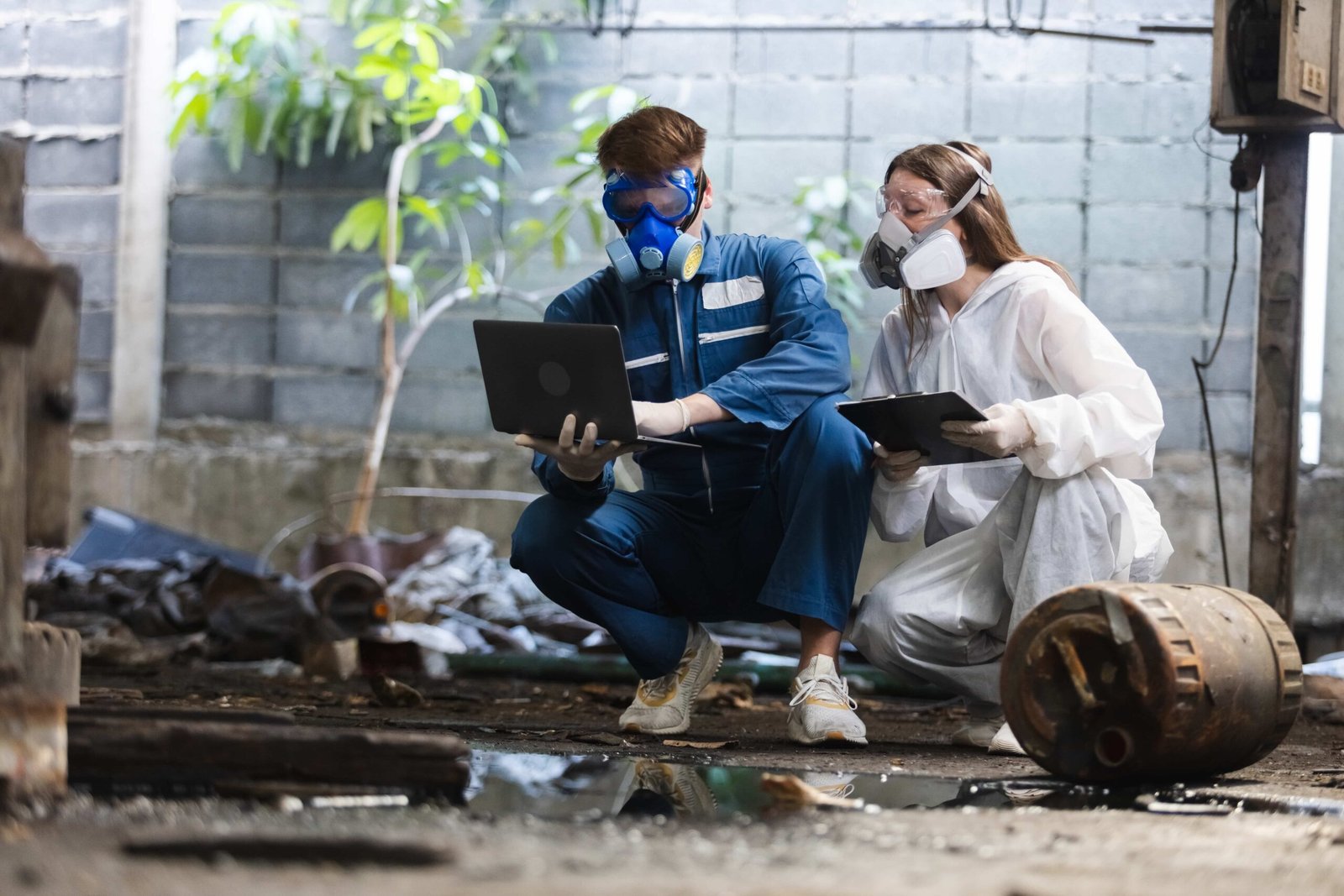
Advanced Professional Certificate in Integrated Disaster Risk Management & Urban Resilience
The Advanced Professional Certificate in Integrated Disaster Risk Management & Urban Resilience develops....

Advanced Professional Certificate in Emergency Operations Centre (EOC) Management & Multi-Agency Coordination
The Advanced Professional Certificate in Emergency Operations Centre (EOC) Management & Multi-Agency Coordination....
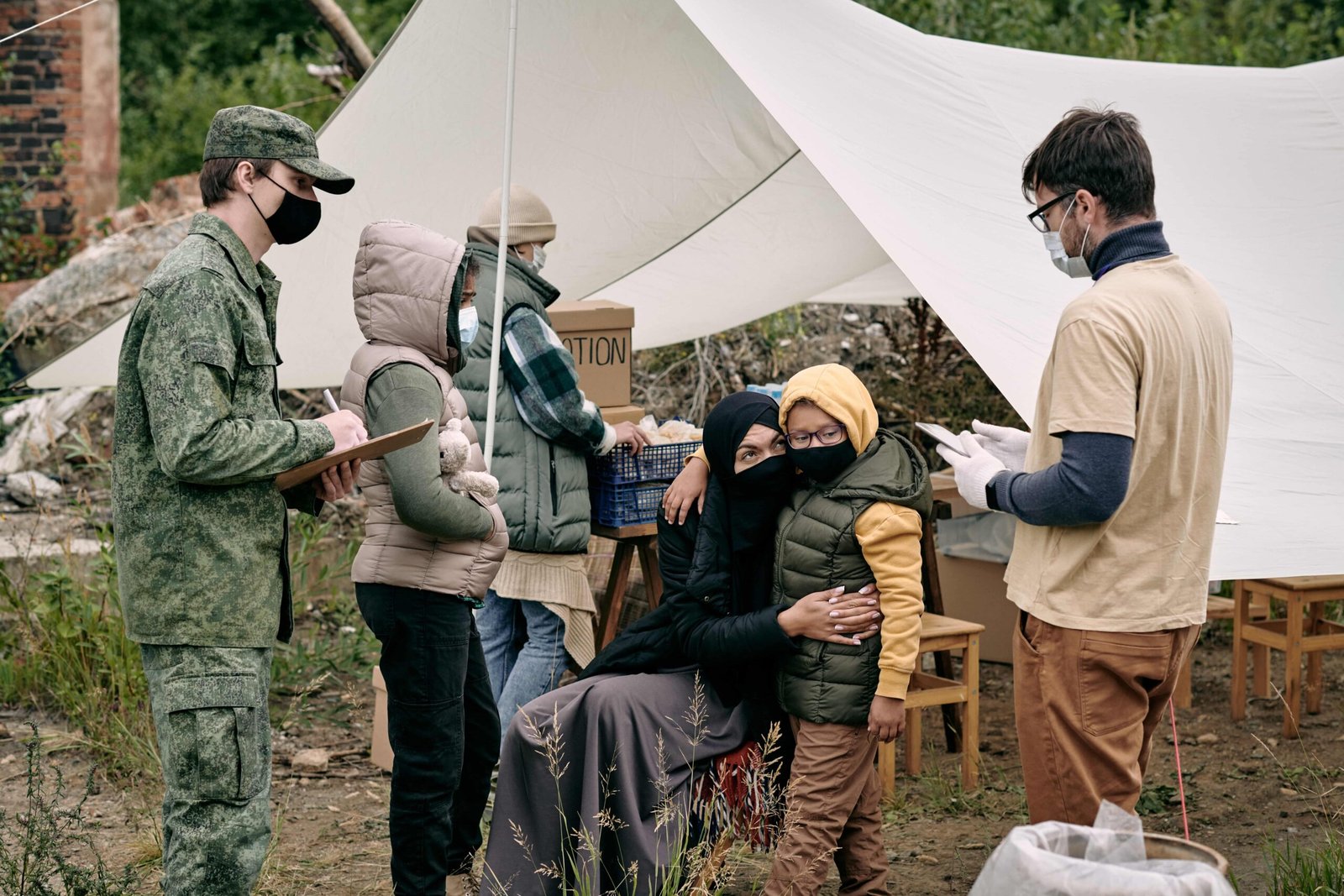
Advanced Professional Certificate in Humanitarian Emergency Management, Relief Logistics & Camp Coordination (Non-Clinical Practice)
The Advanced Professional Certificate in Humanitarian Emergency Management, Relief Logistics & Camp Coordination....

Advanced Professional Certificate in Business Continuity, Organisational Resilience & Recovery Planning
The Advanced Professional Certificate in Business Continuity, Organisational Resilience & Recovery Planning....

Advanced Professional Certificate in Crisis Leadership, High-Stress Decision-Making & Governance in Emergencies
The Advanced Professional Certificate in Crisis Leadership, High-Stress Decision-Making & Governance in Emergencies.....
Together We Learn, Together We Grow
At Whitestone, we believe in collaborative learning where students and faculty grow together through knowledge and experience. Our supportive community fosters teamwork, innovation, and shared success.
Contact & Follow us
Contact Us & Get More Information
Contact us for expert guidance, swift support, and strategic partnerships.

Whitestone International College of Innovation delivers quality-assured, standards-aligned programmes that integrate academic rigour, industry relevance, and digital fluency to develop principled leaders who deliver measurable impact.
Quick Links
Menu
Get Connected
Reach out to us for any queries or assistance. We’re here to support you at every step. Stay connected and let us make things easier for you.
Copyright © 2025 Whitestone International College of Innovation. All rights reserved.