- info@whitestoneinternationalcollege.org.uk
- +44 20 3727 6493
- Mon - Fri : 08.00-17.00
Edit Content
Whitestone International College of Innovation delivers quality-assured, standards-aligned programmes that integrate academic rigour, industry relevance, and digital fluency to develop principled leaders who deliver measurable impact.
- London, United kingdom
- +44 20 3727 6493
-
Info@whitestoneinternational
college.org.uk
 United States
 United Arab Emirates
 India
India
Courses
Whitestone International Diploma in Industrial Automation and Robotics
The diploma introduces core dimensions of industrial control systems, sensors and actuators, basic PLC and control logic awareness, robot workcells, industrial networks, safety awareness, and maintenance and troubleshooting concepts.
Course Overview
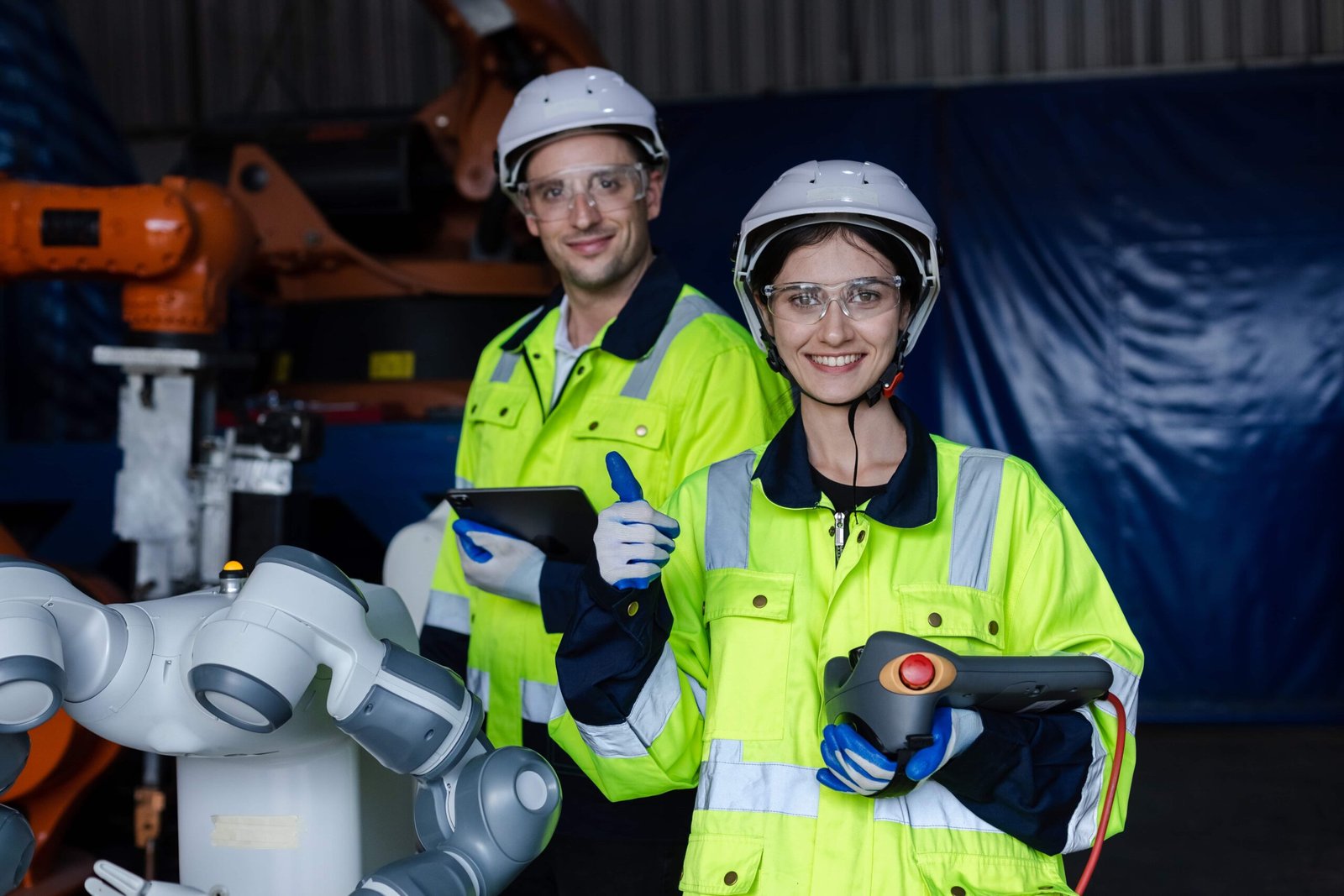
The Whitestone International Diploma in Industrial Automation and Robotics is a 12-month vocational programme designed to provide a structured, practice-oriented foundation in the principles, components, and applications of automation and robotic systems in modern industry.
The diploma introduces core dimensions of industrial control systems, sensors and actuators, basic PLC and control logic awareness, robot workcells, industrial networks, safety awareness, and maintenance and troubleshooting concepts. It is designed for individuals who work in, or aspire to work in, production, maintenance, technical support, engineering assistance, and automation support roles in manufacturing, process, logistics, and related sectors.
Learners will explore how automated and robotic systems are specified, integrated, operated, and maintained, and how they contribute to productivity, quality, and safety when correctly designed and supervised. Emphasis is placed on conceptual understanding, safe operational awareness, and coordination with qualified engineers and specialists, rather than on advanced design, detailed electrical installation, or complex programming work.
By the end of the programme, participants will be able to contribute effectively as technician-level or junior support personnel within industrial automation and robotics environments, operating strictly within defined safety procedures and professional boundaries.
This diploma is vocational and non-regulated. It does not qualify learners as licensed engineers, electricians, or certified robotics programmers, and does not replace any statutory or professional licensing requirements. All practical work with electrical, mechanical, and robotic systems must be supervised and carried out in accordance with applicable safety standards and regulations.
Why This Course is Important?
- Manufacturing, logistics, and process industries increasingly rely on automated machines, control systems, and robotics to remain competitive.
- Reliable operation of automation and robotics requires trained personnel who understand the systems conceptually and follow safe procedures, not just high-level designers.
- Automation can improve safety and quality when properly managed, but can introduce new risks if systems are misused, modified unsafely, or poorly maintained.
Learning Outcomes
By the end of this programme, participants will be able to:
- Explain key concepts in industrial automation, control, and robotics at a vocational level.
- Identify and describe the role of core components in automated systems, including sensors, actuators, basic control elements, and robot cells.
- Demonstrate awareness of PLC-based control, basic logic concepts, and HMI (Human–Machine Interface) use at an introductory level (non-programmer).
- Support the safe operation, monitoring, and basic parameter adjustment of automated equipment within clearly defined procedures.
- Assist in routine maintenance and troubleshooting activities under supervision, following documented instructions and safety protocols.
- Recognise and respect machine and robot safety principles, including guarding, interlocks, safe zones, and emergency procedures.
- Communicate effectively with engineers, operators, and supervisors about automation issues, using appropriate technical terminology at a vocational level.
Target Audience
- Individuals working in or aspiring to roles such as Automation Technician (junior), Robotics Operator, Production Technician, Maintenance Technician (automation focus), Engineering Assistant, or Mechatronics Support Technician.
- Operators and supervisors in manufacturing, packaging, automotive, food and beverage, logistics, and warehousing who increasingly interact with automated lines and robots.
- Graduates of technical/vocational programmes looking to specialise in industrial automation and robotics at a foundational level.
- Employees in SMEs introducing automation who need structured, safety-focused training to support implementation and operation.
Entry Requirements
- A recognised higher secondary qualification, technical diploma, or equivalent, ideally with some exposure to science, technology, or engineering subjects
- Comfort with basic mathematics and technical reading
- Proficiency in English (IELTS 5.5 or equivalent recommended) to understand technical manuals, procedures, and training materials
Programme Structure & Modules
- Definitions and scope of industrial automation and robotics in modern industry.
- Basic concepts of control systems at awareness level: input, process, output, feedback.
- Introduction to mechatronics at a conceptual level: the interaction between mechanical, electrical, and control subsystems.
- Overview of common automated systems: conveyors, packaging lines, simple assembly stations, and robotic cells.
- The role of automation in productivity, quality, and safety, and its limitations when not managed correctly.
- Types and roles of sensors at vocational level:
- Proximity, photoelectric, limit switches, simple level/temperature/pressure awareness.
- Types and roles of actuators and drives at awareness level:
- Basic overview of motors, cylinders, valves, and drives (no wiring or detailed parameterising instruction).
- Concept of signal flow between sensors, controllers, and actuators.
- Introduction to machine safety principles:
- Guarding concepts, interlocks, e-stops, light curtains (conceptual only).
- Safe approach distances and exclusion zones (awareness).
- Emphasis on never bypassing or defeating safety devices, and the requirement to follow local regulations and company procedures at all times.
- Awareness-level introduction to Programmable Logic Controllers (PLCs): role, basic architecture, and I/O concepts.
- Fundamental logic concepts at a conceptual, non-programming level:
- AND, OR, NOT, simple sequences and conditions.
- Understanding PLC programmes at awareness level: reading simple logic diagrams or descriptions to grasp basic system behaviour (not coding).
- Introduction to Human–Machine Interfaces (HMIs):
- Role of HMIs in visualising status and allowing controlled parameter changes under procedure.
- Safe use of HMIs: respecting access rights, change control, and documentation.
- The importance of change management and version control: only trained and authorised personnel to modify programmes.
- Conceptual overview of industrial robots: types (e.g. articulated, SCARA, cartesian) and typical applications (e.g. handling, welding, packaging).
- Anatomy of a robot cell at vocational level: robot arm, controller, end-of-arm tooling, guarding, and interfaces to other equipment.
- Basic concepts of robot motion, work envelopes, and reference positions at awareness level (no detailed path programming).
- Safe operation principles for robot systems:
- Start-up, normal operation, and shutdown within procedure.
- Restricted modes and the importance of authorisation for teaching or manual mode.
- Integration of robots into production lines: simple awareness of handshakes, signals, and coordination with conveyors or machines (non-design level).
- Overview of system integration at a conceptual level: how PLCs, robots, sensors, drives, and HMIs work together.
- Awareness of industrial communication networks (e.g. fieldbus, Ethernet-based networks) at very high level, without configuration detail.
- The role of SCADA and monitoring systems at awareness level: visualisation, alarms, and basic reporting.
- Understanding operational data from automated systems: status indicators, basic counters, and simple performance metrics (e.g. pieces/hour, downtime logs).
- Coordination between automation, maintenance, production, IT, and safety teams for reliable and secure operation.
Principles of preventive and routine maintenance at vocational level: inspections, cleaning, basic replacement tasks under instruction (no unauthorised electrical work).- Structured approach to troubleshooting at awareness level:
- Observing symptoms, checking simple indicators, and following documented procedures.
- Recognising when to stop and escalate to qualified personnel.
- Introduction to lean thinking and basic continuous improvement concepts:
- Waste awareness (e.g. downtime, defects, over-processing).
- Simple ideas for improvement within role boundaries, especially around standardisation and housekeeping.
- Documentation and reporting: maintenance logs, incident reports, and improvement suggestions as tools for organisational learning.
- Professional practice: teamwork between operators, technicians, engineers, and safety representatives to sustain high performance and safe automation.
Awarding Body
Whitestone International College of Innovation
United Kingdom
Qualification Type
International Diploma – Vocational Qualification
(Industry-aligned qualification issued by Whitestone International College of Innovation, UK)

Delivery Mode
Classroom – London (UK) / Dubai (UAE) Campuses
Live Online – Instructor-led virtual sessions
Blended Learning –Digital resources + workshops + applied project

Duration
Total Programme Duration - 12 months (1 year).
Study Pattern -
Standard Track: 12 months part-time / blended.
Intensive Track (where available): 9–12 months with a higher weekly study
commitment.
Total Learning Hours - Approximately 300–360 guided learning hours, plus self study,
practice exercises, and capstone project work.
Assessment Methods Include:
- Written assignments on automation principles, sensors and actuators, PLC and HMI awareness, robotics concepts, and safety fundamentals.
- Practical/structured tasks such as interpreting simple system diagrams, describing basic signal flows, documenting operating steps, or drafting checklists and logs (conceptual, non-wiring).
- Scenario-based exercises requiring learners to respond to typical operational and basic troubleshooting situations, with clear emphasis on safety and escalation.
- Reflective pieces on safe behaviour, teamwork, and professional conduct in automated environments.
- Final Capstone Project: Conceptual Automation & Robotics Application / Improvement Plan, with a structured report and/or presentation.
To obtain the diploma, learners must successfully complete all module assessments and the capstone project in accordance with Whitestone’s academic standards.
Certification:
On successful completion, participants will be awarded:
- Whitestone International Diploma in Industrial Automation and Robotics Issued by Whitestone International College of Innovation, United Kingdom
- Provides a solid, practice-based foundation in industrial automation and robotics for technician-level and junior technical roles.
- Equips learners to operate, monitor, and support automated equipment and robot cells safely, strictly following procedures and escalation pathways.
- Enhances employability in roles such as Automation Technician (junior), Robotics Operator, Production/Packaging Technician, Maintenance Technician (automation focus), or Engineering Assistant.
- Helps organisations strengthen safe, reliable, and efficient use of automation and robotics, supporting productivity and quality.
- Creates a robust platform for further study in Mechatronics, Industrial Automation Engineering (higher level), Robotics Technology, or related disciplines, subject to entry requirements and technical prerequisites.
The programme reflects widely recognised principles of industrial automation, robotics, and safe operations, including:
- Emphasis on system understanding, safe behaviour, and disciplined operation, rather than unsupervised modification or design.
- Focus on integration of mechanical, electrical, and control aspects at a vocational level, and collaboration between operators, technicians, and engineers.
- Recognition of safety, reliability, and continuous improvement as central to sustainable industrial automation.
Programme Fees
Clear Fee Structure With No Hidden Costs
£2000
£
0
-
Industry-focused programmes with global standards.
-
Practical skills for real-world success.
-
Academic excellence with career-ready outcomes.
Featured
Progression & Academic Pathways
Graduates of the Whitestone International Diploma in Industrial Automation and Robotics may:
- Progress to higher-level diplomas or degrees in Mechatronics, Industrial Automation Engineering, Robotics, Electrical/Electronic Engineering (where entry criteria are met).
- Enhance their suitability for roles in manufacturing, process industries, automotive, electronics, logistics, and other sectors adopting automation and robotics.
- Use this diploma as a structured foundation for additional technical and safety qualifications, such as manufacturer-specific training, mechatronics certifications, or further vocational courses, in line with national standards and employer requirements.
Together We Learn, Together We Grow
At Whitestone, we believe in collaborative learning where students and faculty grow together through knowledge and experience. Our supportive community fosters teamwork, innovation, and shared success.
Contact & Follow us
Contact Us & Get More Information
Contact us for expert guidance, swift support, and strategic partnerships.

Whitestone International College of Innovation delivers quality-assured, standards-aligned programmes that integrate academic rigour, industry relevance, and digital fluency to develop principled leaders who deliver measurable impact.
Quick Links
Menu
Get Connected
Reach out to us for any queries or assistance. We’re here to support you at every step. Stay connected and let us make things easier for you.
Copyright © 2025 Whitestone International College of Innovation. All rights reserved.