
- info@whitestoneinternationalcollege.org.uk
- +44 20 3727 6493
- Mon - Fri : 08.00-17.00
Edit Content
Whitestone International College of Innovation delivers quality-assured, standards-aligned programmes that integrate academic rigour, industry relevance, and digital fluency to develop principled leaders who deliver measurable impact.
- London, United kingdom
- +44 20 3727 6493
-
Info@whitestoneinternational
college.org.uk
 United States
 United Arab Emirates
 India
India
Courses
Whitestone International Diploma in Engineering Surveying & Geospatial Technology
The Whitestone International Diploma in Engineering Surveying & Geospatial Technology is a 12- month vocational programme designed to provide a structured, practice-oriented foundation in surveying principles, field measurement, and geospatial data handling for the built environment and infrastructure projects.
Course Overview
The Whitestone International Diploma in Engineering Surveying & Geospatial Technology is a 12- month vocational programme designed to provide a structured, practice-oriented foundation in surveying principles, field measurement, and geospatial data handling for the built environment and infrastructure projects.
The programme integrates four core dimensions:
- Fundamentals of engineering surveying and geodesy – geometry, coordinate systems, datums and reference frameworks at awareness level.
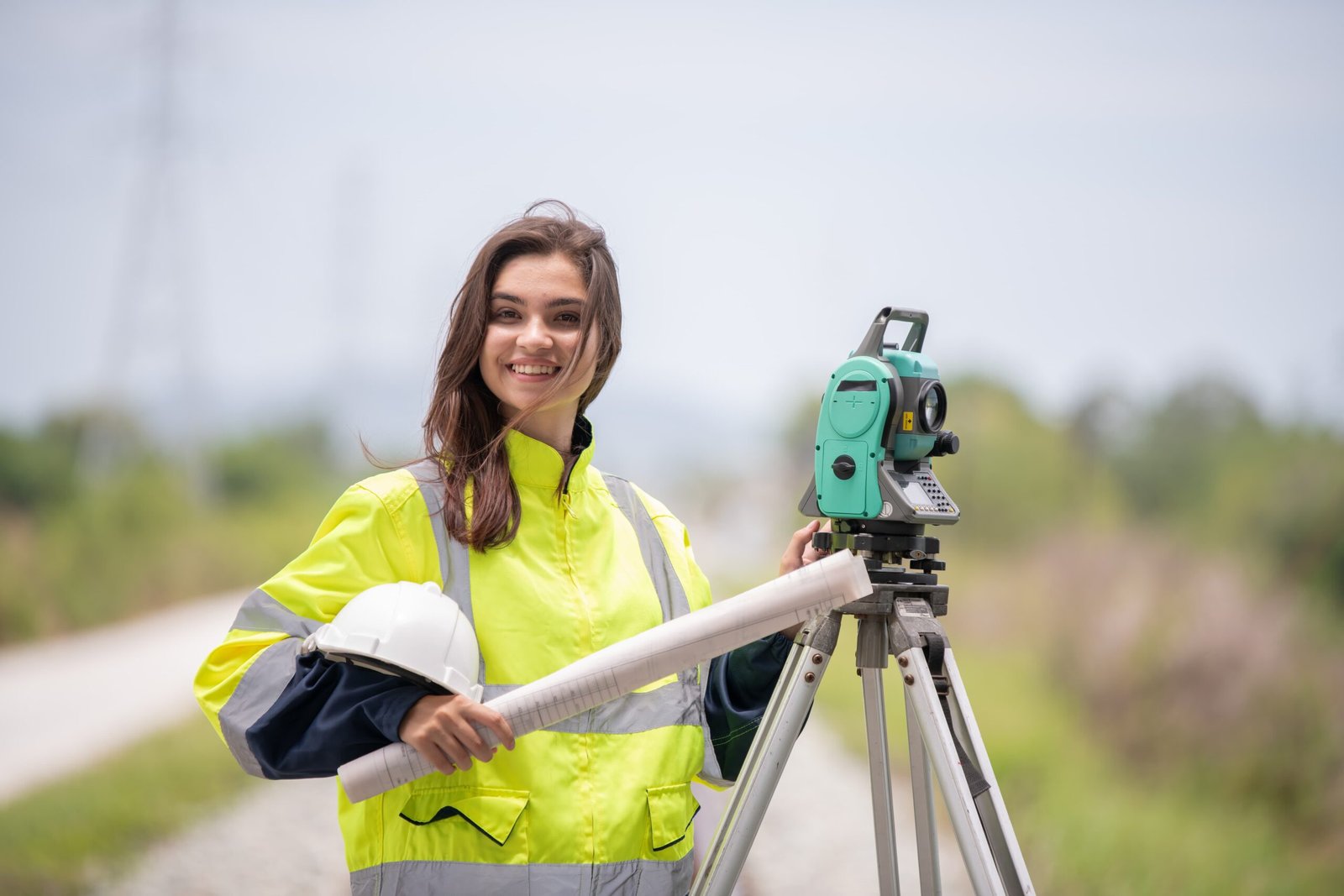
- Survey instruments and field procedures – total stations, levels, GNSS/GPS receivers, and basic field methods for control, setting-out and monitoring.
- Construction and infrastructure applications – support to roads, structures, utilities, earthworks and site development, including as-built checks and deformation monitoring at support level.
- Geospatial data, GIS and emerging technologies – basic data processing, map production, digital models and awareness of remote sensing, UAVs and modern geospatial workflows.
It is intended for individuals who work in, or aspire to work in, surveying support, civil engineering, construction, infrastructure, utilities, mining, land development, and asset-management environments where accurate spatial data and reliable setting-out are critical.
Learners will explore how survey and geospatial teams plan and execute measurements, establish control, set out design positions, collect and manage data, check as-constructed work, and communicate results, always under the direction of qualified surveyors and engineers. The emphasis is on support-level competence, data quality and safe field practice, not on independent cadastral or legal surveying, nor on professional licensure.
This diploma is vocational and non-regulated. It does not qualify learners as licensed/chartered land surveyors, cadastral surveyors, geospatial engineers, or professional engineers, and does not authorise them to define legal property boundaries, sign statutory plans, or assume regulated duty- holder roles. Such responsibilities require additional accredited qualifications, supervised practice, and formal registration with relevant national authorities and professional bodies.
Why This Course is Important?
- From roads and bridges to buildings, utilities and industrial facilities, accurate surveying and geospatial data are essential for safe, efficient and compliant project delivery.
- Engineering organisations increasingly rely on GNSS, total stations, digital terrain models, GIS and coordinated datasets to design, construct, monitor and manage assets.
- Field and office teams need capable surveying and geospatial technicians who can follow procedures, collect reliable data, and prepare clear outputs for engineers and decision- makers.
Learning Outcomes
By the end of this programme, participants will be able to:
- Explain core concepts in engineering surveying, geodesy and geospatial technology at a vocational–intermediate level.
- Assist in planning and executing basic survey tasks, including control surveys, topographic detail, and setting-out, under professional supervision.
- Use total stations, automatic/digital levels and GNSS receivers at support level, following established procedures for measurement, checking and field documentation.
- Contribute to data transfer, basic processing, coordinate calculation and preparation of plans using appropriate software tools (awareness level, non-vendor-specific).
- Support construction and infrastructure activities through setting-out, as-built checks and simple monitoring measurements, in line with safety and quality requirements.
- Demonstrate awareness of quality control, error sources, adjustments at conceptual level, and data integrity in surveying and geospatial work.
- Operate with strong safety, environmental and ethical standards in field and office practice, respecting professional boundaries and legal frameworks.
Target Audience
- Individuals in or aspiring to roles such as Survey Technician, Junior Engineering Surveyor (support level), Geospatial/Mapping Technician, Site Survey Assistant, or Civil Engineering Technician with surveying responsibilities.
- Staff in civil engineering contractors, consulting engineers, survey companies, infrastructure operators, utilities, mining, construction management and government/public-works departments who need strong surveying and geospatial literacy.
- Graduates and technicians in civil engineering, construction, geomatics, geography or related disciplines seeking a practical geospatial and surveying foundation.
- Professionals from adjacent fields (e.g. site supervision, CAD drafting, GIS support, asset or facilities management) who require a stronger understanding of surveying and geospatial processes.
Entry Requirements
- A recognised higher secondary qualification, diploma, or equivalent, preferably with prior study in mathematics, science, engineering, construction or geography
- Comfort with basic trigonometry, coordinate concepts and use of digital tools
- Proficiency in English (IELTS 5.5 or equivalent recommended) to engage with technical materials, field notes, instructions and reports
Programme Structure & Modules
- Role of engineering surveying in:
- Site investigation, design, construction, as-built documentation and asset management.
- Basic geodesy and coordinate systems (awareness level):
- Horizontal and vertical datums, ellipsoids, projections (conceptual), and local site grids at support level.
- Fundamental surveying concepts:
- Distances, angles, bearings, levels, coordinates, and height systems.
- Survey control and reference networks:
- Horizontal and vertical control, benchmarks, control points and their protection.
- Types of surveys:
- Topographic, engineering, construction, monitoring and utility surveys at awareness level.
- Roles and responsibilities:
- Licensed/chartered surveyors, engineers, technicians and field assistants; where this diploma fits in the team.
- Measurement principles:
- Linear measurement, angular measurement, levelling, and sources of error at vocational level.
- Instruments and equipment (awareness and support level):
- Tapes, levels (automatic/digital), theodolites, total stations, and GNSS/GPS receivers.
- Instrument setup and care:
- Setting up over a point, centring, levelling, focusing, and basic checks and adjustments within technician scope.
- Levelling and heighting:
- Differential levelling, profile and cross-section levelling, simple level books and height-of-collimation/reduced level calculations.
- Detail and control surveys:
- Observing detail points, recording codes and attributes, using control points and traverses at awareness level.
- Field notes and data logging:
- Manual field books, digital data collectors, good practice in note-keeping and metadata.
- Surveying for construction projects:
- Site establishment, control for construction, grid lines, and reference points.
- Setting-out at support level:
- Transferring design coordinates to the field under direction; basic line, level and position setting-out for structures and civil works.
- Earthworks and roadworks:
- Simple volume and cross-section awareness; stake-out for cut and fill, road centrelines and slopes (under supervision).
- Structural and utility work:
- Support-level setting-out and checks for foundations, columns, slabs, utilities corridors and manholes.
- As-built surveys and checks:
- Recording completed works, deviation checks and simple comparison to design.
- Monitoring awareness:
- Conceptual understanding of deformation/settlement monitoring, observation approaches and the importance of precision and repeatability.
- GNSS/GPS in engineering surveying:
- Basic concepts of satellites, signals, positioning modes (e.g. static, rapid static, RTK awareness), and limitations.
- Data capture and integration:
- Combining GNSS observations with total-station and levelling data within a project coordinate framework.
- Geospatial data structures:
- Points, lines, polygons, attributes and raster data at conceptual level.
- GIS awareness:
- Introductory concepts of geographic information systems (GIS) for mapping, querying and basic spatial analysis at support level.
- Digital terrain and surface models (DTM/DSM) awareness:
- Conceptual understanding of elevation models and their use in design and volume estimates.
- Emerging technologies (awareness only):
- Overview of UAV/drone surveying, mobile mapping and remote sensing; benefits, limitations and the need for specialist licensing and approvals.
- Data transfer and processing workflows:
- Downloading field data, basic file formats, and organisation of survey projects.
- Basic calculations and coordinate work:
- Simple traverse calculations, coordinate determination, area calculations and height computations at vocational level.
- Error sources and quality control:
- Random, systematic and gross errors awareness; checks, redundancy and simple closure checks.
- Introduction to adjustments (awareness):
- Conceptual understanding of least-squares adjustment and network reliability; when and why professional adjustment is required.
- Survey deliverables:
- Plans, sections, coordinate lists, reports and digital files suitable for engineers, designers and clients.
- Professional practice:
- Accuracy vs precision, realistic claims, data integrity, confidentiality and respect for professional boundaries.
- Field safety:
- Working near traffic, machinery, excavations, watercourses, utilities, and in adverse weather, following HSE and site-safety procedures.
- Environmental considerations:
- Minimising disturbance to sensitive environments and respecting land, crops and property.
- Standards and best practice (awareness only):
- Non-jurisdiction-specific awareness of surveying and mapping standards, guidance from professional bodies and client specifications.
- Coordination and communication:
- Liaising with site management, engineers, designers and other trades; understanding sequencing and access constraints.
- Ethics in surveying and geospatial work:
- Honest reporting, avoiding data manipulation, managing conflicts of interest and respecting landowner and community rights.
- Career and professional development:
- Building a pathway toward technician, senior technician and professional roles, including further study and supervised experience.
Awarding Body
Whitestone International College of Innovation
United Kingdom
Qualification Type
International Diploma – Vocational Qualification
(Industry-aligned qualification issued by Whitestone International College of Innovation, UK)

Delivery Mode
Classroom – London (UK) / Dubai (UAE) Campuses
Live Online – Instructor-led virtual sessions
Blended Learning –Digital resources + workshops + applied project

Duration
Total Programme Duration - 12 months (1 year).
Study Pattern -
Standard Track: 12 months part-time / blended.
Intensive Track (where available): 9–12 months with a higher weekly study
commitment.
Total Learning Hours - Approximately 300–360 guided learning hours, plus self study,
practice exercises, and capstone project work.
Assessment Methods Include:
- Written assignments on foundations of engineering surveying and geodesy; instruments and field procedures; construction and infrastructure applications; geospatial data, GNSS, GIS and remote sensing awareness; data processing, quality control and professional practice; and safety, ethics, standards awareness and coordination.
- Practical tasks such as level-run calculations, simple traverse and coordinate computations, basic data-processing exercises, and preparation of sample plans or coordinate tables from provided or supervised field data.
- Scenario-based exercises requiring learners to propose survey approaches, identify risks and limitations, and communicate results at support level.
- Reflective activities on field practice, data quality, safety and professional behaviour.
- Final Capstone Project: Engineering Survey & Geospatial Data Plan & Deliverables, with a structured written report and/or presentation.
To obtain the diploma, learners must successfully complete all module assessments and the capstone project in line with Whitestone’s academic standards.
Certification:
On successful completion, participants will be awarded:
- Whitestone International Diploma in Engineering Surveying & Geospatial Technology Issued by Whitestone International College of Innovation, United Kingdom
- Provides a robust, practice-oriented foundation in engineering surveying and geospatial technology for early and aspiring practitioners.
- Equips learners to support licensed surveyors, civil engineers and construction teams in planning, executing and documenting survey work to a consistent standard.
- Enhances employability in support-level roles such as Survey Technician, Junior Engineering Surveyor, Geospatial/Mapping Technician or Site Survey Assistant across engineering, construction, utilities, mining and infrastructure sectors, subject to employer and jurisdictional requirements.
- Helps organisations strengthen data quality, construction accuracy, project coordination and asset information, reducing rework and improving safety and efficiency.
- Creates a strong platform for further study in Geomatics, Surveying, Civil Engineering, Geospatial Science, GIS or related disciplines, and for progression towards professional surveying and geospatial credentials, where the learner meets entry criteria.
The programme reflects widely recognised principles of engineering surveying and geospatial practice, including:
- Emphasis on accurate, repeatable measurement, documented procedures and quality control in support of engineering decisions.
- Focus on integration of field measurement with digital geospatial tools and datasets, aligning with contemporary project and asset-management requirements.
- Recognition that safe, reliable surveying depends on competent, ethical practitioners at all levels, working within clear legal, professional and organisational frameworks.
Programme Fees
Clear Fee Structure With No Hidden Costs
£2000
£
0
-
Industry-focused programmes with global standards.
-
Practical skills for real-world success.
-
Academic excellence with career-ready outcomes.
Featured
Progression & Academic Pathways
Graduates of the Whitestone International Diploma in Engineering Surveying & Geospatial Technology may:
- Progress to higher-level diplomas or degrees in Geomatics/Surveying, Geospatial Science, Civil Engineering, GIS & Mapping, or related built-environment and infrastructure disciplines (where entry criteria are met).
- Enhance their suitability for roles in surveying and geospatial support, construction and infrastructure surveying, utilities and asset mapping, and civil-engineering field operations across public and private sectors.
- Use this diploma as a structured foundation for additional professional development, such as specialist surveying and geomatics programmes, GIS and remote-sensing courses, UAV/drone-survey training (where legally permitted), or progression toward professional surveying qualifications, in line with national regulations, professional-body requirements and employer expectations.
Together We Learn, Together We Grow
At Whitestone, we believe in collaborative learning where students and faculty grow together through knowledge and experience. Our supportive community fosters teamwork, innovation, and shared success.
Contact & Follow us
Contact Us & Get More Information
Contact us for expert guidance, swift support, and strategic partnerships.

Whitestone International College of Innovation delivers quality-assured, standards-aligned programmes that integrate academic rigour, industry relevance, and digital fluency to develop principled leaders who deliver measurable impact.
Quick Links
Menu
Get Connected
Reach out to us for any queries or assistance. We’re here to support you at every step. Stay connected and let us make things easier for you.
Copyright © 2025 Whitestone International College of Innovation. All rights reserved.