
Courses
Professional Certificate in PLC, SCADA & Industrial Control Technology
The Professional Certificate in PLC, SCADA & Industrial Control Technology provides learners with a
practical foundation in programmable industrial control and supervisory monitoring technologies
used across modern manufacturing, utilities, energy, infrastructure and process industries.
Course Overview
The Professional Certificate in PLC, SCADA & Industrial Control Technology provides learners with a
practical foundation in programmable industrial control and supervisory monitoring technologies
used across modern manufacturing, utilities, energy, infrastructure and process industries.
The programme introduces Programmable Logic Controllers (PLCs), Supervisory Control and Data
Acquisition (SCADA), Human–Machine Interfaces (HMIs), industrial input and output systems,
control logic, alarms, communications and basic process monitoring.
Learners will understand how PLCs execute control instructions, how field devices provide process
information and how SCADA and HMI platforms enable operators to monitor and interact with
industrial systems. The programme also introduces basic troubleshooting, operational reliability and
industrial-control cybersecurity awareness.
This course is ideal for technicians, operators, engineering learners and professionals seeking an
introductory but professionally structured pathway into programmable automation and industrial
control technology.
Why This Course is Important?
- PLC and SCADA technologies are widely used across automated industrial facilities.
- Understanding programmable control is increasingly important for technical and operations professionals.
- SCADA systems provide essential process monitoring, alarm management and operational visibility.
- The programme establishes a foundation for advanced study in automation, instrumentation, control engineering technologies and industrial digitalisation.
Learning Outcomes
By the end of this programme, participants will be able to:
- Understand the purpose and architecture of PLC-based industrial control systems.
- Identify common PLC hardware, input and output modules and field devices.
- Explain basic control logic and programmable sequence concepts.
- Understand the functions of SCADA and HMI systems.
- Describe how industrial systems collect, display and manage process information.
- Recognise alarms, interlocks and basic control-system troubleshooting principles.
- Understand introductory industrial communication and network concepts.
- Identify basic cybersecurity and operational risks affecting industrial control systems.
Target Audience
- Electrical and instrumentation technicians
- Maintenance personnel
- Plant and process operators
- Automation technicians
- Engineering students and graduates
- Production and manufacturing professionals
- Technical supervisors
- Utilities and infrastructure personnel
- Professionals seeking introductory PLC and SCADA knowledge
Entry Requirements
- No previous PLC programming experience required.
- Basic electrical or industrial knowledge is helpful but not essential.
- English proficiency is suggested.
- Learners should have an interest in industrial automation and control technology.
Programme Structure & Modules
- Role of PLCs in industrial automation
- PLC architecture and hardware components
- Central processor, power supply and memory fundamentals
- Digital and analogue input/output concepts
- Sensors, switches, transmitters and actuators
- Connecting field devices to programmable-control systems
- Introduction to control logic
- Basic ladder-logic concepts
- Timers, counters, sequencing and interlocks
- Purpose and architecture of SCADA systems
- HMI screens and operator interaction
- Process visualisation, alarms and trends
- Introduction to industrial communication networks
- PLC, HMI and SCADA integration
- Data exchange and connected control systems
- Basic PLC and SCADA fault diagnosis
- Alarm and interlock awareness
- Industrial-control cybersecurity fundamentals and operational resilience
Awarding Body
Whitestone International College of Innovation
United Kingdom
Qualification Type
Professional Certificate - Short Course
(Industry-aligned, regulated qualification issued by Whitestone International College of Innovation, UK)

Delivery Mode
Classroom – London (UK) / Dubai (UAE) campuses
Live Online – Instructor-led virtual sessions
Blended Learning –Prestudy materials + workshops + capstone assignment

Duration
3 days intensive or 1 week part-time
CPD Hours: 18–21 hours
Assessment:
- Practical exercises + short knowledge test + PLC and SCADA control concept project
Certification:
- Successful participants receive the Professional Certificate in PLC, SCADA & Industrial Control Technology from Whitestone International College of Innovation, UK.
- Build a practical foundation in PLC technology
- Understand industrial inputs, outputs and field devices
- Develop awareness of control logic and automated sequences
- Understand SCADA and HMI monitoring systems
- Gain insight into industrial communication and system integration
- Improve awareness of industrial-control reliability and cybersecurity
- Receive a UK-issued professional certificate
- Progress to advanced automation, instrumentation and control-system programmes
Aligned with international industrial-control and automation practices, including PLC architecture, programmable control, SCADA systems, HMI technology, industrial communications, alarms and interlocks, process monitoring, operational reliability and foundational industrial-control cybersecurity principles.
Programme Fees
Clear Fee Structure With No Hidden Costs
£
350
Per Course
-
Industry-focused programmes with global standards.
-
Practical skills for real-world success.
-
Academic excellence with career-ready outcomes.
Featured
Related Courses
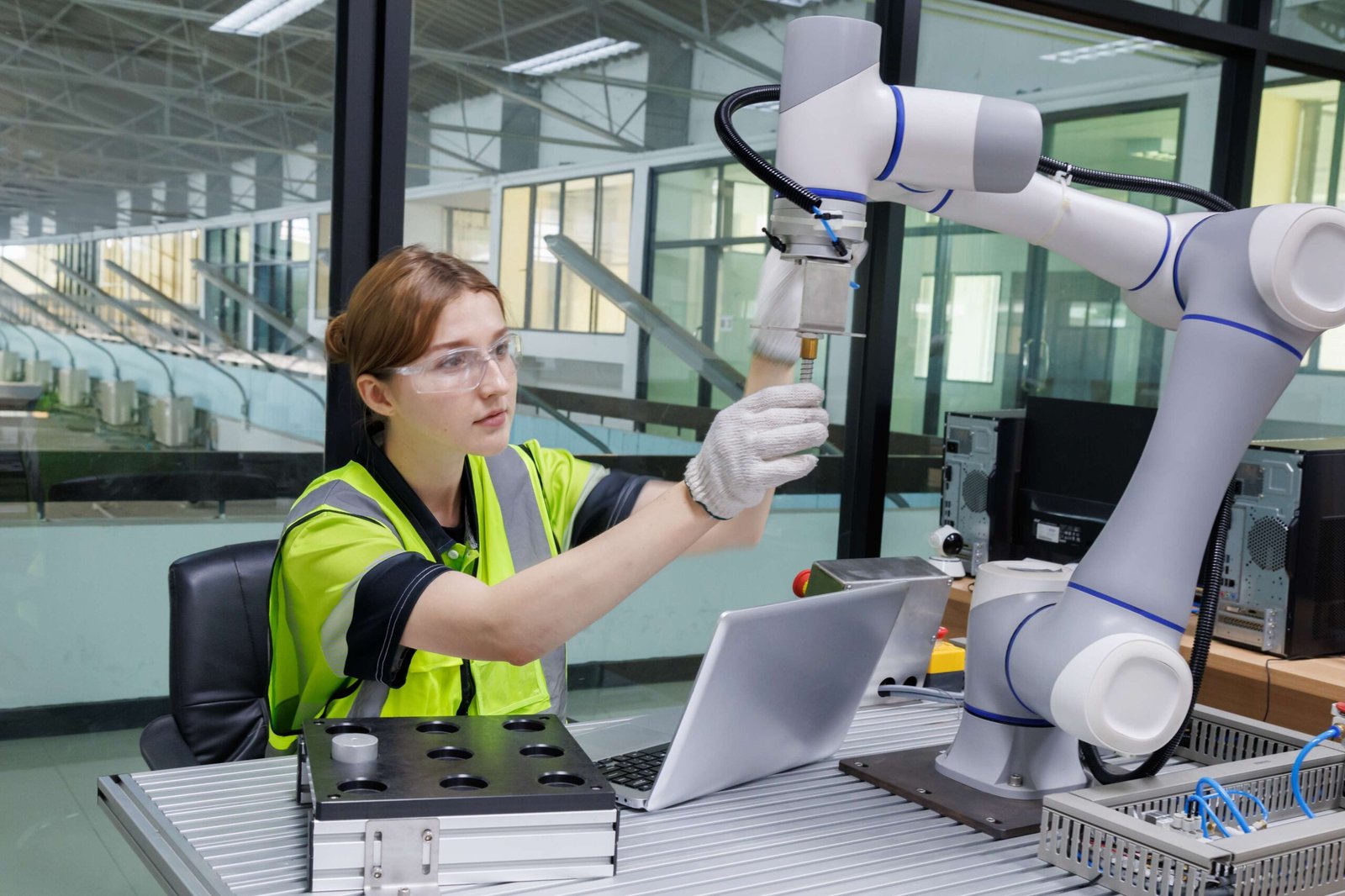
Professional Certificate in Robotics & Automation Fundamentals
The Professional Certificate in Robotics & Automation Fundamentals provides learners with....

Professional Certificate in Industrial Automation & Control Systems
The Professional Certificate in Industrial Automation & Control Systems provides learners with a practical introduction to....
Together We Learn, Together We Grow
At Whitestone, we believe in collaborative learning where students and faculty grow together through knowledge and experience. Our supportive community fosters teamwork, innovation, and shared success.